


The Future of Agro-Processing in Africa: From Raw Harvest to Global Value Chains
For decades, the story of African agriculture has been a paradox of immense potential and missed opportunities. The continent possesses over 60% of the world’s remaining uncultivated arable land, yet it imports tens of billions of dollars worth of processed food annually. Historically, Africa has exported its wealth in its rawest form—unrefined cocoa beans, raw cashew nuts, and fresh fruits—only to buy them back as manufactured chocolates, packaged snacks, and refined juices.
But a quiet revolution is taking place across the continent. Driven by rapid urbanization, technological integration, and visionary ecosystems like ENATTA, Africa is shifting away from being a mere supplier of raw commodities.
The future of African agriculture belongs to agro-processing. By transforming raw agricultural products into high-value, shelf-stable, and market-ready goods right on domestic soil, modern food systems are fundamentally reshaping food security, economic growth, and global trade.
1. Eradicating Post-Harvest Loss through Modern Preservation
One of the most immediate challenges facing African food security isn’t production—it’s preservation. Studies show that sub-Saharan Africa loses up to 40-50% of its root crops, fruits, and vegetables before they ever reach a consumer’s plate. This staggering post-harvest loss is primarily due to fragmented supply chains, inadequate storage, and a lack of local processing facilities.
Modern agro-processing directly solves this crisis.
[Raw Surplus Harvest] ➔ [Localized Agro-Processing Centers] ➔ [Dehydration / Canning / Milling] ➔ [Extended Shelf Life & Food Security]
By establishing processing plants close to farming communities, seasonal gluts can be immediately converted into non-perishable goods. For instance:
- Tomatoes that would normally rot in transit are converted into paste and purees.
- Cassava and grains are milled into fortified flours.
- Fruits are dehydrated or juiced, preserving their nutritional profile for months.
When modern agro-processing facilities are paired with climate-smart cold chain logistics, the shelf life of African produce multiplies. This stabilization creates a buffer against climate shocks, droughts, and lean seasons, turning seasonal volatility into year-round food security.
2. Strengthening Domestic Food Security and Nutrition
A resilient food system requires a localized supply chain. The global disruptions of recent years highlighted the extreme vulnerability of relying on foreign food imports. Modern agro-processing builds domestic self-reliance.
Beyond simply preserving food, the future of processing in Africa involves nutritional fortification. Local processors are increasingly fortifying staple foods with essential vitamins and minerals (such as Vitamin A, Zinc, and Iron) to combat malnutrition and stunting.
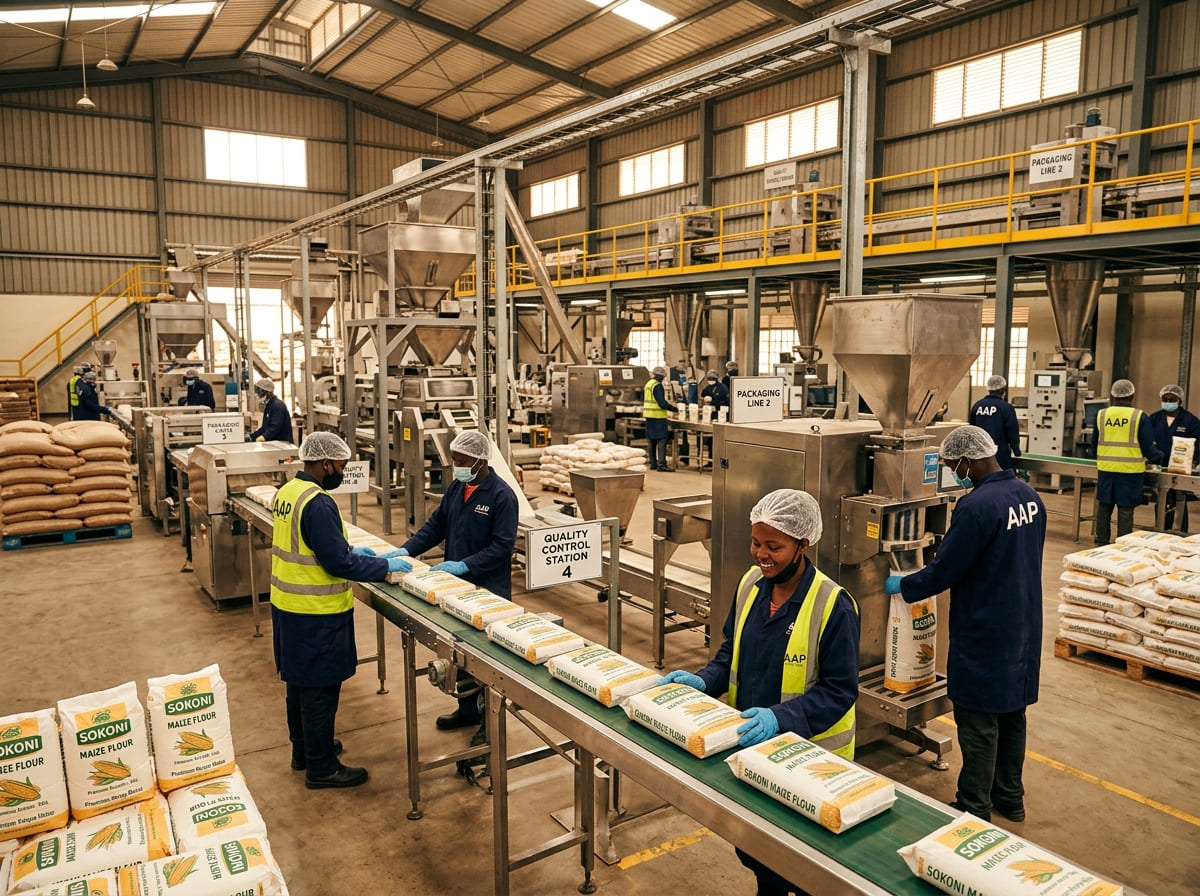
Furthermore, industrializing the food production line ensures that food safety standards match international benchmarks. High-tech sorting, automated cleaning, and sterile packaging systems guarantee that African consumers receive safe, high-quality, and affordable nutrition grown and processed by their own neighbors.
3. Powering Economic Growth and Industrialization
Agriculture is the backbone of African livelihoods, employing over half of the continent’s workforce. However, relying on raw crop sales keeps rural communities trapped in low-income cycles. Agro-processing acts as a powerful catalyst for industrialization and economic mobility.
The Multiplier Effect of Value Addition
When a country processes its crops domestically, it captures the highest margins of the agricultural value chain.
- Job Creation: Processing facilities require a diverse workforce—from machine operators and food scientists to quality control experts, administrative staff, and engineers.
- Rural Development: Placing industrial facilities in peri-urban and rural agricultural hubs injects wealth directly into farming communities, curbing rural-to-urban migration.
- SME Growth: A single processing hub creates an economic ecosystem around itself, stimulating local businesses in packaging manufacturing, machinery maintenance, and domestic retail.
Through this industrial shift, farming transitions from a subsistence struggle into a highly profitable enterprise, creating a new class of rural wealth.
4. Redefining Exports and Global Trade Infrastructures
The African Continental Free Trade Area (AfCFTA) has unlocked the largest free trade zone in the world. Agro-processing is the golden key to maximizing this historic agreement. Instead of tariff-heavy raw exports, African nations can now seamlessly trade high-value, packaged food brands with one another.
On the global stage, modern export infrastructure is rewriting how the world views African products.
Traditional Model:  [Raw Export] ➔ [Foreign Processing] ➔ [Global Profits Left Overseas]
The ENATTA Model:    [Local Processing] ➔ [Certified Export Infrastructure] ➔ [Premium African Brands Worldwide]
By integrating international food safety certifications (such as ISO, HACCP, and FDA compliance) directly into local production lines, African agribusinesses can bypass traditional middlemen. High-end, sustainably sourced African food products—from specialty organic oils to premium dried fruits—can move smoothly from state-of-the-art packaging lines straight onto supermarket shelves in London, New York, and Tokyo.
Conclusion: ENATTA and the Path Forward
The transformation of African agriculture requires more than just goodwill; it demands integrated ecosystems. Isolated farms cannot thrive without processing centers, and processing plants fail without reliable logistics and export channels.
This is the exact blueprint that ENATTA is pioneering. By weaving together modern agro-processing complexes, world-class food production lines, uninterrupted cold chain networks, and global export infrastructures, ENATTA is building a unified ecosystem where African agricultural wealth is preserved, multiplied, and shared with the world.
The future of agro-processing in Africa is no longer a distant vision. It is happening right now—on factory floors, inside temperature-controlled trucks, and in the flourishing livelihoods of farmers across the continent. Africa is ready to feed itself, and ultimately, to feed the world.
Enjoyed this insight into the future of African agribusiness? Subscribe to the ENATTA newsletter for more updates on our journey to revolutionize the continent’s food ecosystem.